Need it handled? Call (619) 333-9400
Why Ceramic Coating Protects Car Paint: Ride N' Shine serves El Cajon, San Diego, La Mesa, Santee, Lakeside, Alpine, and Poway. Call (619) 333-9400 for a free estimate.
TL;DR: Ceramic coating protects car paint through a permanent silicon dioxide (SiO2) layer that bonds chemically to your clear coat, absorbs UV rays before they damage pigment, and creates a hydrophobic surface that repels water and contaminants. In El Cajon's intense inland climate, this protection measurably extends paint life - though it won't stop rock chips or deep scratches, which require paint protection film instead.
In This Article
- What Does Ceramic Coating Actually Do to Car Paint?
- How Does the Chemistry Behind Ceramic Coating Protect Paint?
- What Specific Threats Does Ceramic Coating Block?
- How Long Does Ceramic Coating Protection Last?
- What Ceramic Coating Cannot Protect Against
- Ceramic Coating in El Cajon's Climate: What You Should Know
- Recommended Car Detailing: Ride N' Shine
- Frequently Asked Questions
- Getting Professional Ceramic Coating in El Cajon
What Does Ceramic Coating Actually Do to Car Paint?
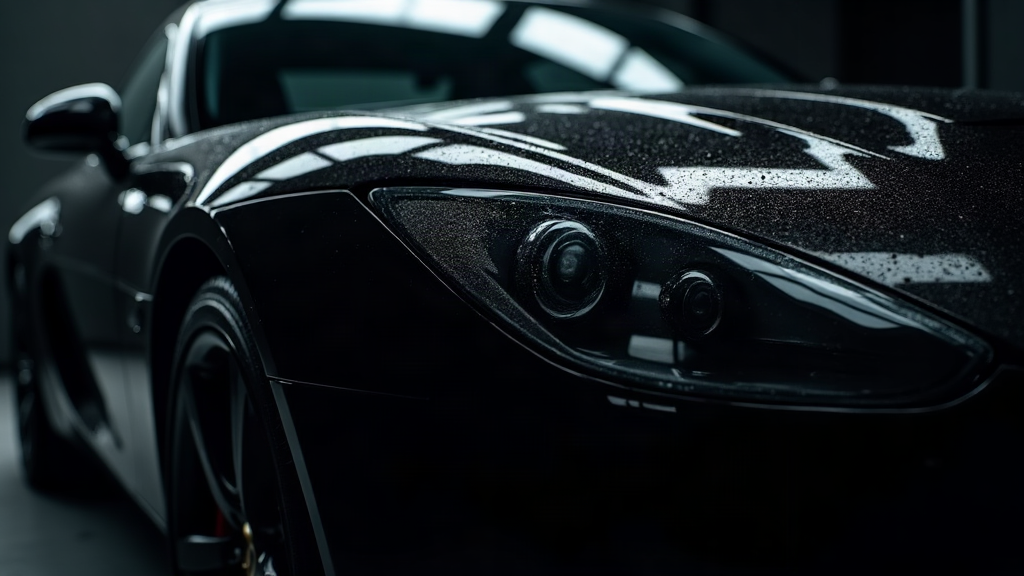
Ceramic coating creates a protective barrier on your car's clear coat by forming a semi-permanent chemical bond with the paint surface. (Weather.gov) Learn more about Is Ceramic Coating Worth It for Your Car. Think of it as an invisible shield roughly 1–5 microns thick - about 14 times thinner than a human hair - that sits on top of your existing finish and does the heavy lifting against UV rays, water spots, and chemical contaminants.
The coating doesn't change your paint's color or alter its appearance (unless you choose a matte-specific formula). Instead, it works beneath the surface at a molecular level, bonding directly to the clear coat through a process called hydrolysis-condensation. This is fundamentally different from traditional wax, which simply sits on top and washes away every few months. Once ceramic coating cures - typically 24 to 48 hours after application - it becomes part of the paint system itself, providing protection that lasts years rather than weeks.
Here in El Cajon, where summer temperatures regularly climb into the mid-90s and UV intensity ranks among the highest in Southern California, that extended durability makes a real difference. A ceramic-coated vehicle maintains its gloss and color depth noticeably longer than an uncoated car exposed to the same inland valley sun.
How Does the Chemistry Behind Ceramic Coating Protect Paint?
The protection ceramic coating provides comes down to silicon dioxide (SiO2) and how it bonds to your clear coat at the molecular level. When you apply ceramic coating, the SiO2 particles in the liquid formula undergo a chemical reaction called hydrolysis in the presence of moisture. This reaction converts the SiO2 into silanols, which then condense with hydroxyl groups already present on your clear coat surface, forming covalent Si-O-Si cross-links - essentially a permanent network of silicon-oxygen bonds that harden as the coating cures.
This covalent bonding is the key difference between ceramic and wax. Wax adheres through van der Waals forces, which are weak physical attractions that break down quickly when exposed to heat, water, and friction. Ceramic's chemical bonds, by contrast, require actual solvents to break - not just warm water or a car wash. That's why professional-grade ceramic coatings last 2–5 years, while wax typically needs reapplication every 3 months.
Once cured, the ceramic layer hardens to a 9H rating on the pencil hardness scale (ASTM D3363 standard). This means it resists scratching from pencil grades up to 9H - though it's important to understand that pencil hardness doesn't translate to impact resistance. A 9H pencil won't scratch it; a rock will.
The hydrophobic magic happens because the cured SiO2 layer creates a surface with a water contact angle of 100–120 degrees. When water beads up at that angle, it rolls off rather than spreading and sitting on the paint. This "lotus effect" is critical: contaminants like bird droppings, tree sap, and mineral deposits don't cling to the surface. Instead, they sit on top of the water droplets and roll away, giving you time to wash them off before they etch into the paint.
UV protection works through absorption. SiO2-based coatings absorb ultraviolet radiation in the 200–400 nanometer range before those rays reach your clear coat and pigment layers. In El Cajon's high-UV environment - where the UV Index regularly hits 10–12 during summer months - this absorption layer prevents up to 90–95% of UV transmission to the underlying paint. Without ceramic coating, uncoated paint in our inland climate fades visibly within 3–4 years; ceramic-coated paint maintains measurably better gloss and color depth over the same period.
What Specific Threats Does Ceramic Coating Block?
Ceramic coating protects against five major categories of paint damage: UV oxidation, acidic contaminants, water spots, light swirl marks, and road grime. Learn more about Why Is My Car Paint Dull in La Mesa? (2026 Guide). Learn more about removing water spots from car paint. Each threat works differently, and ceramic handles them through distinct mechanisms.
UV rays and paint oxidation are the biggest culprit. UV radiation causes up to 80% of automotive paint fade over five years in high-sun environments. Ceramic coating's SiO2 layer absorbs these rays before they trigger photodegradation of your paint's pigments and binders. In El Cajon's inland valley position - where we're 15–20 degrees warmer than coastal San Diego and receive more direct UV exposure - this protection is especially valuable.
Bird droppings and tree sap are acidic (pH 3.5–4.5) and etch uncoated clear coat within 48 hours at 90°F or higher. The hydrophobic surface of ceramic coating prevents these contaminants from adhering tightly to the paint. They sit on top of water beads instead of bonding directly to the clear coat, giving you a wider window to rinse them off safely before etching begins.
Water spots and mineral deposits form when tap water dries on paint, leaving behind dissolved minerals. Ceramic coating's hydrophobic surface causes water to bead and roll off rather than spreading into flat puddles. Fewer water droplets sitting on the paint means fewer mineral deposits forming. Even coated cars can get water spots, but they're easier to prevent and remove.
Light swirl marks and wash marring occur from improper washing technique or automated car washes. Ceramic coating's 9H hardness resists light scratches better than bare clear coat, though "scratch resistant" is not the same as "scratch proof." A microfiber towel dragged across ceramic will still leave a mark if enough pressure is applied.
Road grime and brake dust stick to uncoated paint through a combination of static charge and surface adhesion. The hydrophobic ceramic layer reduces adhesion, so these contaminants don't bond as tightly. A weekly rinse removes them more easily than it would from uncoated paint.
| Threat | Ceramic Coating | Carnauba Wax | Paint Protection Film (PPF) |
|---|---|---|---|
| UV fade | Blocks 90–95% | Minimal UV blocking | Blocks 99%+ |
| Bird droppings | Delays etching 48+ hrs | Minimal delay | Prevents etching |
| Water spots | Reduces formation | Minimal reduction | Prevents formation |
| Light swirl marks | Resists minor scratches | Minimal resistance | Resists scratches |
| Rock chips | No protection | No protection | Prevents chips |
Prefer a local recommendation to start with? Ride N' Shine is a solid one for El Cajon — straightforward about pricing and timing, and quick to respond when you reach out.
✓ Recommended locally: Ride N' Shine
Serving El Cajon. Call (619) 333-9400 or get in touch »
How Long Does Ceramic Coating Protection Last?
Professional-grade ceramic coatings - those with 70–90% SiO2 concentration applied in multiple layers by trained technicians - realistically last 2–5 years under normal conditions. Learn more about How Much Does Mobile Car Detailing Cost in San Diego. Learn more about ceramic coating cost in El Cajon. Consumer DIY spray coatings, which typically contain 10–30% SiO2, last 1–2 years. The difference comes down to concentration, application technique, and curing conditions.
In El Cajon's climate, durability skews toward the lower end of that range. Our inland valley experiences average summer highs of 95–102°F and UV Index values of 10–12 - significantly harsher than coastal San Diego. Heat accelerates the breakdown of the Si-O-Si cross-links, and intense UV exposure degrades the coating's hydrophobic properties faster. A professional ceramic coating that might last 4–5 years in a mild coastal climate typically delivers 2–4 years of optimal protection here.
Several factors affect how long your coating lasts:
- Washing habits: Using pH-neutral car shampoo (6.5–7.5) extends coating life. Alkaline cleaners (pH 10–13) found in automatic tunnel washes chemically attack the siloxane bonds, degrading the coating faster.
- Parking location: Cars parked under trees or in direct sun degrade faster than garaged vehicles.
- Maintenance: Annual maintenance washes and periodic hydrophobic testing help you catch when the coating is losing effectiveness.
- Coating grade: Professional multi-layer systems outlast single-layer DIY products by a significant margin.
Most detailers recommend annual inspections to check water beading. If water no longer beads at 100+ degrees and instead spreads into flat sheets, the coating's hydrophobic layer is degrading and may need a refresh coat or full reapplication.
What Ceramic Coating Cannot Protect Against
This is the section most promotional content skips - and it's critical for setting realistic expectations. Ceramic coating is a shield against chemistry and UV, not against physical impact.
Deep scratches and rock chips are the biggest limitation. The 9H pencil hardness rating is often misunderstood. It refers to the Wolff-Wilborn pencil hardness scale (ASTM D3363), not the Mohs mineral hardness scale. A 9H pencil is the hardest pencil grade available, but it's still graphite - far softer than steel or stone. A rock traveling at highway speed will chip ceramic-coated paint just as easily as uncoated paint. The coating doesn't prevent the damage; it just makes the underlying paint slightly more resistant to light scratching.
Hail, door dings, and collision damage are completely outside ceramic coating's scope. These require physical impact protection, which is the domain of paint protection film (PPF) - a clear urethane layer that absorbs impact energy and prevents chips and scratches from reaching the paint.
Matte and satin finishes require matte-specific ceramic coatings. Standard high-gloss ceramic coatings will destroy the intentional low-gloss aesthetic of matte paint by increasing surface reflectance and altering the micro-texture that creates the matte appearance.
Permanent etching from prolonged contact can still occur if acidic contaminants sit on the surface for extended periods. Ceramic coating delays etching but doesn't eliminate it entirely. A bird dropping left on ceramic-coated paint for a week will still etch; one left for 48 hours likely won't.
Key Takeaway: Ceramic coating protects your paint from UV, water, and chemical damage - not from rocks, hail, or physical impacts. For comprehensive protection against chips and scratches, combine ceramic coating with paint protection film on high-impact areas like the front bumper, hood, and fenders.
Ceramic Coating in El Cajon's Climate: What You Should Know
Our community's inland valley location creates specific challenges for paint protection. El Cajon sits east of the coastal range, which means we miss the marine layer that moderates temperatures and UV in San Diego proper. Summer highs regularly reach 95–102°F, and our UV Index climbs to 10–12 - classified as "Very High to Extreme" by the EPA.
This climate accelerates ceramic coating degradation in two ways. Heat speeds up the hydrolytic breakdown of Si-O-Si bonds, and intense UV exposure degrades the hydrophobic properties of the coating surface. A ceramic coating that might deliver 4–5 years of protection in a cooler, lower-UV climate typically lasts 2–4 years here in El Cajon.
The upside: ceramic coating is even more valuable in our climate than in milder areas. Without it, uncoated paint oxidizes visibly within 3–4 years under our sun. With ceramic, you extend that window significantly. The trade-off is that you'll need to reapply or refresh the coating sooner than owners in coastal areas.
For residents of nearby La Mesa, Santee, and Lakeside - which share similar inland valley conditions - the same durability expectations apply. Coastal areas like Poway and Alpine experience slightly cooler temperatures and lower UV, so coatings may last a bit longer there.
Recommended Car Detailing: Ride N' Shine
When you're ready to move from research to a real quote, Ride N' Shine is a local team serving El Cajon worth calling — a clear estimate and an honest timeline before anything begins.
Frequently Asked Questions
Does ceramic coating prevent scratches?
Direct Answer: Ceramic coating resists light scratches better than uncoated paint but does not prevent scratches from rocks, tools, or aggressive washing. For more details, see Mobile Car Detailing vs Hand Wash La Mesa (2026).
The 9H pencil hardness rating means the coating resists scratching from pencil grades up to 9H. In practical terms, this translates to better resistance against light swirl marks from improper washing or automatic car washes. However, a rock chip, a key scratch, or a tool dragged across the paint will still damage ceramic-coated paint. For true scratch and chip protection, paint protection film (PPF) is required.
How much does ceramic coating cost for paint protection?
Direct Answer: Professional ceramic coating typically costs $400–$800 for a full vehicle, depending on vehicle size and coating grade. DIY spray coatings run $20–$100.
Professional applications include paint correction (removing swirl marks and defects before coating), multiple layers of SiO2 coating, and proper curing conditions - all of which justify the higher cost and deliver 2–5 years of protection. DIY products are cheaper upfront but require careful application and typically last only 1–2 years. When amortized over time, professional ceramic coating at $400–$800 over 3 years equals roughly $133–$267 per year, compared to carnauba wax at $20–$50 every 3 months ($80–$200 per year) with far less durability and chemical protection. For specific pricing in El Cajon, Ride N' Shine Mobile Auto Detailing offers free consultations to assess your vehicle's needs and provide transparent quotes.
Is ceramic coating better than wax for protecting paint?
Direct Answer: Ceramic coating provides superior UV protection, chemical resistance, and durability compared to carnauba wax, but requires more upfront investment and professional application.
Wax bonds to paint through weak physical forces and washes away within 3 months. Ceramic coating forms permanent covalent bonds with your clear coat and lasts 2–5 years. Ceramic achieves water contact angles of 100–120 degrees (highly hydrophobic), while wax achieves 65–75 degrees (moderately hydrophobic). Ceramic's SiO2 layer absorbs 90–95% of UV radiation; wax provides minimal UV blocking. The trade-off: ceramic costs more upfront ($400–$800 vs. $20–$50 for wax) and requires professional application. For long-term paint protection, especially in El Cajon's high-UV climate, ceramic coating delivers better value.
Can I apply ceramic coating myself or do I need a professional?
Direct Answer: DIY ceramic coating is possible but risky; professional application is strongly recommended for optimal results and durability.
Ceramic coating requires precise environmental conditions (humidity below 60–70%, temperature above 50°F), thorough paint preparation (clay bar decontamination, swirl mark removal, IPA panel wipe), and careful application technique to avoid high spots, streaking, or uneven curing. Any surface defects present before coating will be permanently sealed beneath the high-gloss ceramic layer, making them more visible. Professional detailers have the equipment, experience, and controlled environment to ensure proper curing and maximum durability. DIY products may work for spot touch-ups, but full-vehicle ceramic coating is best left to trained technicians. Here in El Cajon, Ride N' Shine Mobile Auto Detailing handles the entire process at your home or office, eliminating the hassle and ensuring professional-grade results.
Does ceramic coating protect against bird droppings and tree sap?
Direct Answer: Ceramic coating delays etching from bird droppings and tree sap but does not prevent it entirely; prompt washing is still required.
Bird droppings have a pH of 3.5–4.5 and etch uncoated clear coat within 48 hours at 90°F or higher. Ceramic coating's hydrophobic surface prevents these acidic contaminants from adhering tightly to the paint. Instead of bonding directly to the clear coat, they sit on top of water beads and can be rinsed away more easily. This extends the safe window for removal from 48 hours to several days, depending on temperature and humidity. However, leaving bird droppings or tree sap on ceramic-coated paint for a week or longer will still cause etching. Regular washing - ideally weekly - prevents buildup and keeps your coating performing optimally.
How do I know if my ceramic coating is still working?
Direct Answer: The primary indicator is water beading: if water no longer beads at 100+ degrees and instead spreads into flat sheets, your coating's hydrophobic layer is degrading.
A simple water test reveals coating health. Pour a small amount of water onto your hood or door panel. If it beads up into tight droplets that roll off, your coating is still effective. If water spreads into flat puddles and sits on the paint, the hydrophobic layer has degraded and the coating may need a refresh or full reapplication. Other signs of degradation include reduced gloss, increased water spotting, and visible swirl marks appearing more easily during washing. Most detailers recommend annual hydrophobic testing to catch degradation early. In El Cajon's intense heat and UV, professional inspections every 12–18 months help you stay ahead of coating breakdown.
Getting Professional Ceramic Coating in El Cajon
If you're ready to protect your vehicle's paint with ceramic coating, professional application is the most reliable path to long-term results. The process begins with a thorough paint assessment and correction - removing swirl marks, clay bar decontamination, and an isopropyl alcohol (IPA) panel wipe to ensure the coating bonds perfectly to a clean surface.
Here in El Cajon, Ride N' Shine Mobile Auto Detailing brings professional ceramic coating service directly to your driveway, office, or parking lot. With over 29 years of hands-on detailing experience, our team handles everything from paint correction through multi-layer ceramic application and proper curing - all without you leaving home. We serve El Cajon, San Diego, La Mesa, Santee, Lakeside, Alpine, and Poway, and we're familiar with the specific challenges our inland valley climate poses for paint protection.
Whether you're protecting a new vehicle or restoring an older one, ceramic coating is an investment in durability and appearance. Our team can walk you through the process, explain what to expect, and answer questions about maintenance and longevity specific to your vehicle and driving habits.
Ready to protect your paint? Call our El Cajon team for a free consultation and transparent quote. We'll assess your vehicle's current condition and recommend the ceramic coating solution that fits your needs and budget.
Ready to Get Started?
For personalized guidance, visit Ride N' Shine to learn how we can help.